

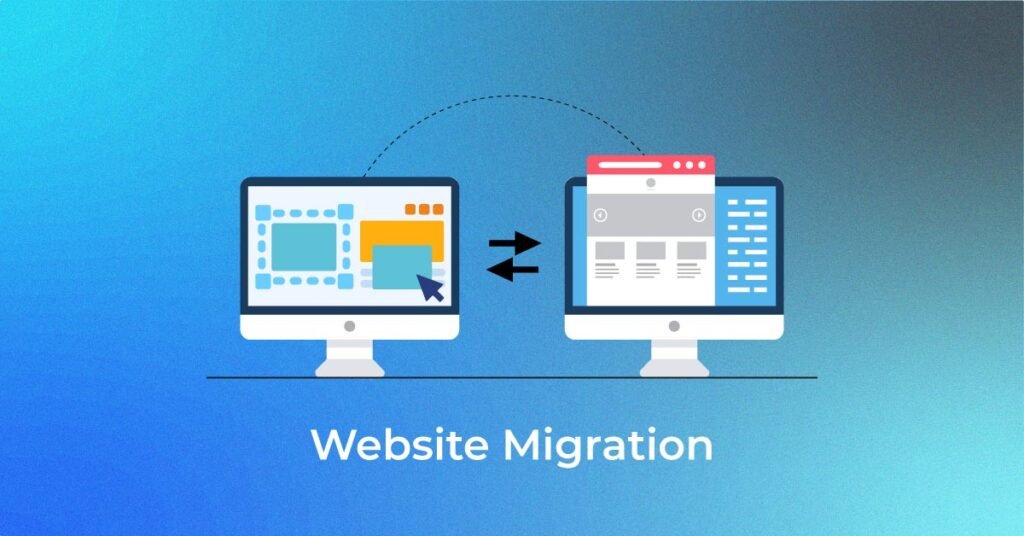
A website migration can be an important step for a growing business. Companies may migrate their websites to a new hosting platform, change their domain, move to a different content management system, improve their website structure, or completely redesign the user experience. While migration can bring significant performance and usability benefits, it also creates SEO risks if the process is not carefully planned.
A poorly managed migration can result in broken links, lost content, incorrect redirects, indexing problems, and sudden drops in organic traffic. The good news is that businesses can reduce these risks by treating SEO as an essential part of the migration process rather than something to address after the new website goes live.
What Is Website Migration?
Website migration refers to a significant change to a website’s technical setup, structure, design, platform, or domain. The exact process depends on what the business is changing.
Common examples include:
- Moving from one hosting provider to another
- Changing a website domain
- Switching content management systems
- Moving from HTTP to HTTPS
- Restructuring URLs
- Redesigning an existing website
- Combining multiple websites
- Changing website architecture
Not every migration involves all of these changes, but even a relatively simple redesign can affect SEO if existing URLs, content, internal links, or technical settings are changed.
Why Website Migration Can Affect SEO
Search engines build an understanding of a website based on its pages, links, content, technical signals, and historical performance. When these elements change suddenly, search engines may need to reassess the website.
For example, if an old service page has a strong backlink profile and generates consistent organic traffic but disappears during a redesign, the business may lose valuable search visibility.
Similarly, changing URLs without implementing proper redirects can create broken links and prevent users and search engines from reaching the new versions of important pages.
This is why SEO planning should begin before development or design work starts.
Start With a Complete Website Audit
Before migrating a website, businesses should understand what they already have. A detailed SEO audit can identify the pages and assets that should be protected during the migration.
The audit should include important information such as:
- Existing URLs
- Organic traffic
- Keyword rankings
- Backlinks
- Indexed pages
- Metadata
- Internal links
- XML sitemaps
- Redirects
- Canonical tags
- Important service and landing pages
- Technical SEO issues
This information provides a baseline for comparison after the new website launches.
A full service digital agency can coordinate website development, design, SEO, analytics, and technical implementation during this stage, helping businesses manage the migration from multiple perspectives.
Create a URL Mapping Strategy
One of the most important steps in a website migration is mapping old URLs to their corresponding new URLs.
If a page’s URL changes, the business should determine where visitors and search engines should be directed. In most cases, relevant permanent redirects should be implemented from the old URL to the most appropriate new URL.
For example, if:
example.com/old-service
becomes:
example.com/services/new-service
the old URL should redirect to the relevant new page rather than simply returning an error.
URL mapping should be prepared before launch, not after problems begin appearing in search results.
Use 301 Redirects Correctly
Permanent redirects are an important part of protecting existing SEO signals during a migration. They help guide users and search engines from old URLs to their new destinations.
However, redirects should be relevant. Sending every old page to the homepage is generally not an effective strategy because the destination may not satisfy the original search intent.
Businesses should also avoid unnecessary redirect chains. Ideally, an old URL should point directly to its final destination rather than passing through several intermediate URLs.
Preserve Valuable Content
A website redesign often involves rewriting or removing content. While improving outdated content can be beneficial, removing pages without evaluating their SEO value can create unnecessary losses.
Before deleting a page, businesses should check whether it receives organic traffic, ranks for valuable keywords, attracts backlinks, or supports important internal links.
If content needs to be removed, businesses should determine whether it can be improved, merged with another relevant page, or redirected to a genuinely appropriate alternative.
Protect Your Website Architecture
Website structure can change significantly during a redesign. Navigation menus, categories, service pages, and internal links may all be reorganized.
The new architecture should remain logical and easy for users and search engines to navigate. Important pages should not become buried several clicks deep without a good reason.
Internal links should also be reviewed after migration. Links pointing to old URLs should be updated to point directly to the new URLs wherever possible.
Make Mobile Responsiveness a Priority
A migration is an excellent opportunity to improve the mobile experience. Businesses should ensure that the new website works properly across smartphones, tablets, and desktop devices.
Responsive web design Qatar businesses can use helps websites adapt their layouts and content to different screen sizes. Navigation, forms, buttons, images, typography, and page elements should remain easy to use across devices.
Mobile usability is especially important for businesses targeting local customers who frequently search for services using smartphones.
Keep SEO in Mind During Website Redesign
A visual redesign should not accidentally remove important SEO elements. When using website redesign services, businesses should ensure that existing metadata, optimized content, internal links, structured data, headings, image optimization, and other relevant elements are reviewed before launch.
Designers and developers should work alongside SEO professionals so that the new website looks modern without sacrificing existing search visibility.
The goal should be to improve the website rather than simply make it look different.
Test Everything Before Launch
A staging website provides an opportunity to identify problems before the new version becomes publicly available.
Businesses should test:
- Redirects
- Internal links
- Forms
- Navigation
- Images
- Page loading
- Mobile responsiveness
- Metadata
- Canonical tags
- Robots.txt
- XML sitemap
- Structured data
- Indexing settings
- Analytics and tracking
A common migration mistake is accidentally blocking search engines from accessing the new website. Technical settings should therefore be carefully reviewed before launch.
Monitor SEO Performance After Migration
SEO work does not end when the new website goes live. The first few weeks after migration should involve close monitoring.
Businesses should compare organic traffic, rankings, indexed pages, crawl errors, conversions, and other important metrics against their pre-migration baseline.
Google Search Console can be particularly useful for identifying indexing problems and unexpected technical issues.
If rankings or traffic decline, businesses should investigate quickly rather than assuming the changes will resolve themselves.
Choosing the Right SEO Partner
A successful migration requires coordination between design, development, and SEO. Businesses looking for the best SEO company Qatar should evaluate whether the provider understands technical SEO and website migrations rather than focusing only on keyword rankings.
The right partner should be able to work with developers, identify SEO-critical pages, create redirect strategies, monitor indexing, and compare performance before and after launch.
This integrated approach can significantly reduce the risk of losing valuable organic visibility.
Conclusion
Website migration can improve performance, usability, security, and business growth, but it needs to be handled strategically. SEO should be involved from the planning stage through development, testing, launch, and post-migration monitoring.
By auditing the existing website, mapping URLs, implementing relevant redirects, preserving valuable content, maintaining a logical architecture, optimizing mobile performance, and monitoring search visibility after launch, businesses can make the transition much safer.
A successful migration is not simply about launching a newer website. It is about building a better website while protecting the SEO value the business has already earned.