

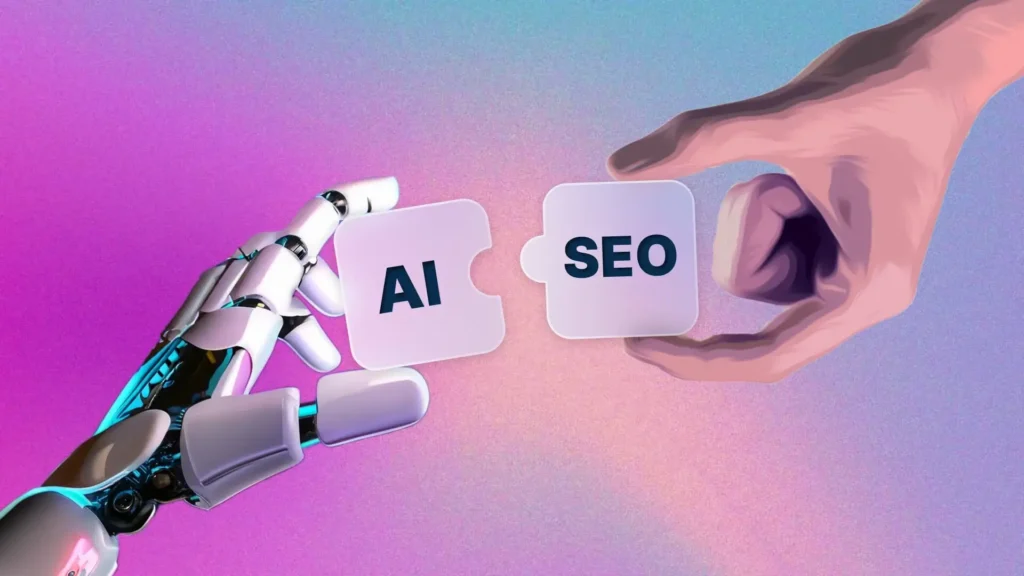
Search engine optimization is changing rapidly as artificial intelligence becomes a bigger part of how people search, discover businesses, and consume information online. Search engines are becoming better at understanding context, user intent, conversations, and the overall quality of content.
For businesses, this means traditional SEO tactics alone may not be enough to maintain strong visibility. Companies need smarter strategies that combine SEO fundamentals with artificial intelligence, data analysis, content optimization, and a better understanding of customer behavior.
AI SEO strategies can help businesses work more efficiently while creating useful content and improving their visibility across modern search experiences. The goal is not to replace SEO with AI, but to use AI intelligently while keeping quality, expertise, and users at the center of the strategy.
What Is AI SEO?
AI SEO refers to the use of artificial intelligence technologies to improve different parts of the search engine optimization process.
AI can assist businesses with tasks such as:
- Keyword and topic research
- Search intent analysis
- Content planning
- Competitor research
- Content optimization
- Technical SEO analysis
- Internal linking opportunities
- Performance analysis
- Identifying content gaps
However, AI should be treated as a supporting technology rather than a complete SEO solution. Human expertise is still important for understanding the business, customers, industry, and unique value a brand provides.
1. Use AI to Understand Search Intent
One of the most important parts of modern SEO is understanding why someone is searching for something.
A keyword may have informational, commercial, navigational, or transactional intent. AI tools can help analyze search patterns and identify the types of content users may expect from a particular query.
For example, someone searching for “website development services” may be looking for a service provider, while someone searching for “how website development works” is probably looking for educational information.
Understanding these differences allows businesses to create the right content for the right audience.
2. Build Content Around Topics, Not Just Keywords
Search engines increasingly evaluate whether a website demonstrates meaningful knowledge about a subject.
Instead of creating one article for every individual keyword, businesses can build topic clusters around their main services.
For example, a web development company could create content covering:
- Website development
- Website performance
- Mobile optimization
- WordPress development
- Website security
- UX design
- Website maintenance
- Conversion optimization
AI can help identify related questions and subtopics that may be useful to cover. This allows businesses to create more comprehensive content while reducing the risk of producing repetitive articles.
3. Create Better Content With AI Assistance
AI can speed up the content creation process, but simply publishing AI-generated articles is not a strong SEO strategy.
Businesses should use AI for research, outlines, brainstorming, and optimization while adding human expertise, examples, opinions, and original insights.
Content should answer real customer questions and provide information that is genuinely useful.
A good approach is:
AI-assisted research → Human expertise → Original content → SEO optimization → Quality review
This workflow can make content production more efficient without sacrificing authenticity.
4. Optimize Existing Content
Creating new content is only one part of SEO. Existing pages can also contain valuable opportunities for improvement.
AI can help identify articles that may need:
- Updated information
- Better headings
- Improved readability
- Additional questions and answers
- Stronger internal links
- Better keyword targeting
- Missing subtopics
- Improved meta titles and descriptions
Regular content optimization can help businesses keep important pages relevant as search behavior changes.
Companies investing in professional seo services can combine AI-assisted analysis with experienced SEO strategy to identify opportunities that may otherwise be missed.
5. Improve Technical SEO With AI
Technical SEO can involve analyzing large amounts of website data. AI can help identify potential issues and patterns more efficiently.
Businesses can use AI-assisted tools to review areas such as:
- Broken links
- Duplicate content
- Page performance
- Crawlability
- Metadata
- Internal linking
- Indexing issues
- Website structure
However, technical recommendations should always be reviewed before implementation. Automated tools can identify potential problems, but understanding their impact requires technical knowledge and context.
6. Optimize for AI-Powered Search
Search is becoming more conversational. Users may ask complete questions instead of entering short keyword phrases.
AI-powered search experiences can provide summarized answers, related information, recommendations, and sources from multiple websites.
To improve visibility in these environments, businesses should create clear, authoritative, well-structured content.
Useful practices include:
- Answering questions directly
- Using descriptive headings
- Providing accurate information
- Supporting claims with credible sources
- Demonstrating industry expertise
- Keeping important information easy to understand
The fundamentals of good SEO still matter, but content must increasingly satisfy both traditional search and conversational search behavior.
7. Use AI for Competitor Analysis
Understanding competitors can reveal valuable SEO opportunities.
AI can help analyze competing websites and identify areas such as:
- Topics they cover
- Keywords they target
- Content gaps
- Frequently discussed questions
- Page structures
- Search opportunities
The objective should not be to copy competitors. Instead, use competitive insights to identify opportunities to create something more useful, more complete, or more relevant.
A strong SEO strategy should always add unique value rather than simply reproduce what is already available online.
8. Strengthen Local SEO With AI
Local businesses can also benefit from AI-driven SEO strategies.
AI can help identify local search topics, customer questions, location-specific content opportunities, and patterns in search behavior.
For example, a business serving customers in Doha may create content around local services, customer needs, neighborhoods, and industry-specific searches.
Businesses should still maintain accurate business information, optimize location pages, collect genuine reviews, and maintain a strong local presence.
For companies targeting the Qatar market, working with the best seo company Qatar can help combine local SEO knowledge with modern optimization strategies.
9. Personalize the Customer Journey
AI can also support personalization beyond search rankings.
Businesses can analyze customer behavior to understand which pages visitors interact with, what content attracts attention, and where users leave the website.
These insights can help improve:
- Landing pages
- Calls to action
- Content recommendations
- Navigation
- Lead-generation forms
- Customer experiences
Better personalization can make websites more relevant to different visitor groups and potentially improve conversions.
10. Monitor SEO Performance With AI
SEO produces large amounts of data. AI can help businesses identify patterns and trends within that data.
Instead of looking only at rankings, businesses should monitor:
- Organic traffic
- Search impressions
- Click-through rates
- Conversions
- Keyword visibility
- Engagement
- Landing page performance
- Leads and inquiries
AI can help highlight unusual changes or potential opportunities, but businesses should connect these insights to real business objectives.
For companies competing in Qatar, a reliable seo company in Qatar can use data-driven analysis alongside human strategy to continuously improve SEO performance.
11. Keep Human Expertise at the Center
AI can process information quickly, but it does not automatically understand a company’s unique experience, customers, reputation, or competitive advantages.
Human expertise is essential for creating content that demonstrates real knowledge and provides meaningful value.
Businesses should use AI to improve efficiency, not to remove the human element from their SEO strategy.
The strongest approach combines technology with:
- Industry expertise
- Original insights
- First-hand experience
- Strong brand voice
- Accurate information
- Customer understanding
Conclusion
AI is transforming how businesses approach SEO, from keyword research and content planning to technical analysis and search optimization.
However, successful SEO is not about using AI everywhere. It is about using the technology strategically while maintaining high-quality content, technical excellence, user-focused experiences, and genuine expertise.
Businesses that combine AI with strong SEO fundamentals can create more relevant content, identify new opportunities, improve efficiency, and adapt to the changing search landscape.
The future of SEO will belong to businesses that use AI intelligently—not as a shortcut, but as a powerful tool for building better search experiences and sustainable online growth.