

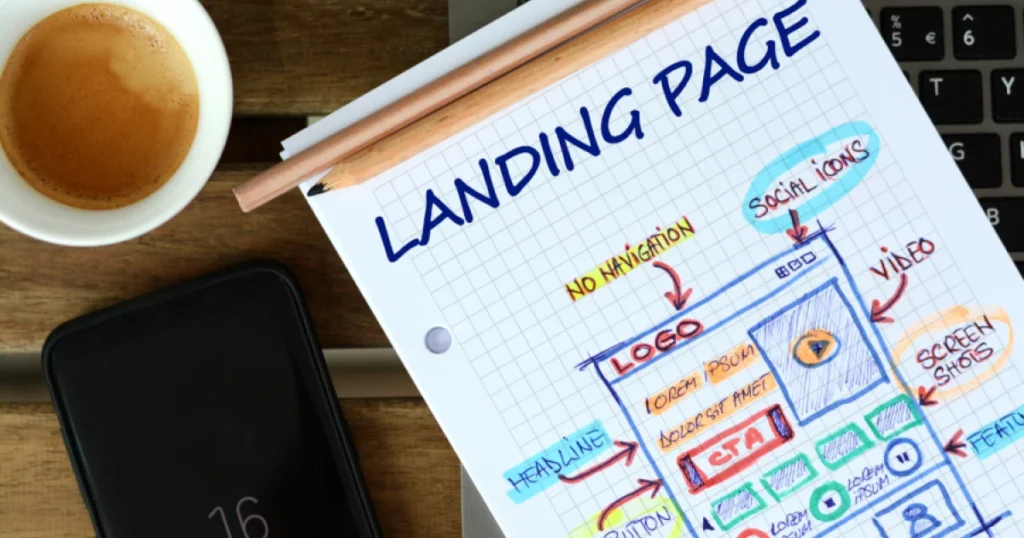
Getting visitors to your website through SEO is only the first step. The real goal is to turn those visitors into leads, customers, or inquiries.
This is where landing page design becomes important.
A well-designed landing page can help visitors quickly understand your offer, find the information they need, and take the desired action. At the same time, a properly optimized landing page can support organic search visibility and create a better overall user experience.
For businesses investing in SEO, combining search optimization with conversion-focused landing page design can create a much stronger digital marketing strategy.
What Is a Landing Page?
A landing page is a focused webpage designed to encourage visitors to complete a specific action.
Depending on the business, that action could be:
- Requesting a quote
- Booking a consultation
- Calling the business
- Purchasing a product
- Signing up for a service
- Downloading a resource
- Completing a contact form
Unlike a general homepage, a landing page usually focuses on one specific audience, service, product, or campaign.
Why Landing Page Design Matters for SEO
SEO brings targeted visitors to your website, but visitors still need a reason to stay.
A landing page with confusing navigation, weak messaging, slow loading times, or unclear calls to action can cause visitors to leave without taking action.
Effective landing page design can improve:
- User experience
- Content clarity
- Engagement
- Mobile usability
- Conversion opportunities
- Trust
- Lead generation
When SEO and conversion optimization work together, businesses can get more value from the traffic they already generate.
Match the Landing Page With Search Intent
One of the most important aspects of SEO-friendly landing page design is understanding search intent.
Consider what the visitor is actually looking for when they search.
For example, someone searching for “website development services” may want to compare providers, while someone searching for “hire a WordPress developer” may already be closer to making a purchasing decision.
Your landing page should address that specific intent.
The headline, content, benefits, visuals, and call to action should all align with what the visitor expects to find.
Create a Clear and Compelling Headline
The headline is one of the first things visitors see.
A strong headline should quickly communicate:
- What you offer
- Who it is for
- What benefit the customer can expect
Avoid vague headlines that force visitors to figure out what the page is about.
A clear headline also helps search engines understand the primary topic of the page when it is supported by relevant content and proper page structure.
Keep the Page Focused
Landing pages work best when they have a clear purpose.
Too many competing messages can distract visitors and reduce conversions.
Instead of trying to promote every service on one page, create focused landing pages for important offerings.
For example, a digital agency might create separate pages for:
- SEO
- Web development
- PPC
- Social media marketing
- Local SEO
- Website maintenance
This allows each page to target a specific search intent and audience.
Use Strong Calls to Action
A landing page should tell visitors what to do next.
A call to action, or CTA, might say:
- Get a Free Consultation
- Request a Quote
- Book a Strategy Call
- Contact Our Team
- Start Your Project
The CTA should be easy to find and clearly connected to the page’s main objective.
Avoid overwhelming visitors with too many competing CTAs.
Build Trust With Social Proof
Visitors may hesitate to contact a business if they are unsure whether they can trust it.
Landing pages can reduce this hesitation by including relevant trust signals such as:
- Customer testimonials
- Reviews
- Case studies
- Client logos
- Certifications
- Awards
- Project examples
Social proof provides visitors with evidence that other customers have had positive experiences with the business.
Optimize Landing Page Content for SEO
Landing page content should be written for people first while naturally incorporating relevant search terms.
Important SEO elements include:
- Page title
- Meta description
- Main heading
- Subheadings
- Relevant body content
- Image alt text
- Internal links
- Descriptive URLs
Businesses investing in seo optimization services should ensure that landing pages are optimized without making the content repetitive or unnatural.
Keyword stuffing can make a page difficult to read and may negatively affect the overall quality of the user experience.
Improve Page Loading Speed
Landing page performance can directly influence the visitor experience.
If a page takes too long to load, visitors may leave before seeing the offer.
Businesses should optimize elements such as:
- Large images
- Unnecessary scripts
- Videos
- Fonts
- Third-party integrations
- Server performance
- Caching
A faster landing page creates a smoother experience and makes it easier for visitors to interact with important conversion elements.
Make Landing Pages Mobile-Friendly
A significant amount of web traffic comes from smartphones.
Your landing page should therefore work smoothly across different screen sizes.
Make sure:
- Text is easy to read
- Buttons are easy to tap
- Forms work correctly
- Images fit the screen
- Navigation is simple
- Important information appears without excessive scrolling
A mobile-friendly landing page can improve usability for visitors searching for your services from their phones.
Use Internal Links Strategically
Internal linking helps visitors discover related information while helping search engines understand the relationship between pages.
For example, a landing page for web development could link to relevant service pages, case studies, blog articles, or contact pages.
However, internal links should be useful and relevant rather than added simply to increase the number of links on a page.
Local Landing Pages Can Generate Qualified Leads
Businesses targeting specific geographic areas can benefit from location-focused landing pages.
For example, a company serving multiple cities could create dedicated pages explaining its services in each relevant market.
A local landing page should include genuinely useful information about the location rather than simply replacing the city name throughout the same generic content.
Businesses investing in local seo services USA can use this approach to create more relevant experiences for users searching for services in specific areas.
Personalize the Visitor Experience
Different audiences may have different needs.
A landing page targeting small businesses should not necessarily use the same messaging as a page targeting enterprise organizations.
Businesses can improve conversions by considering:
- Industry
- Customer problems
- Location
- Service requirements
- Buying stage
- Common objections
More relevant messaging can help visitors understand why a particular service is suitable for them.
Reduce Unnecessary Distractions
A landing page should guide visitors toward the intended action.
Too many pop-ups, animations, navigation options, advertisements, or unrelated offers can distract users.
This does not mean every landing page should be completely minimal. Instead, every element should serve a clear purpose.
Ask whether each section helps visitors understand the offer, build trust, overcome an objection, or take action.
Make Forms Simple
Long forms can discourage potential customers from submitting inquiries.
Only request information that is genuinely necessary at the first stage of the sales process.
For example, a basic consultation form might initially ask for:
- Name
- Business name
- Project requirements
Additional information can often be collected later.
Testing different form lengths can help determine what works best for your audience.
Test and Improve Your Landing Pages
A landing page should not be considered finished after it is published.
Businesses can monitor:
- Conversion rate
- Form submissions
- Click-through rate
- Bounce or engagement metrics
- Traffic sources
- Device performance
- CTA interactions
A/B testing can also be used to compare different headlines, CTAs, layouts, images, and forms.
Continuous testing can reveal opportunities to improve performance over time.
Should Every SEO Page Be a Landing Page?
Not necessarily.
SEO landing pages are particularly useful when targeting specific services, products, locations, or search intents.
However, informational blog posts, resource pages, category pages, and other website content have different purposes.
A strong SEO strategy should use different page types together rather than turning every page into a sales-focused landing page.
When to Work With a Digital Agency
Creating landing pages that balance SEO, design, user experience, and conversions requires more than simply adding keywords to a webpage.
Businesses that hire digital agency professionals can benefit from combining different areas of expertise, including SEO, web design, development, content, analytics, and conversion optimization.
For small businesses in particular, the right strategy can help turn existing website traffic into more meaningful business opportunities.
Final Thoughts
Landing page design plays an important role in converting SEO traffic into real business results.
A successful landing page should match search intent, communicate its value clearly, load quickly, work well on mobile devices, build trust, and provide visitors with an obvious next step.
SEO can help bring the right people to your website, while effective landing page design can help convince them to stay and take action.
For businesses looking for the best digital agency for small businesses, combining SEO with conversion-focused landing page design can create a stronger foundation for sustainable online growth.