

Not every visitor who lands on your website has the same needs, interests, or buying intent. A first-time visitor may still be researching your business, while another may already be comparing services and preparing to decide.
Showing the same experience to everyone can limit your website’s ability to convert visitors into customers.
This is where website personalization can make a difference.
Personalization allows businesses to create more relevant website experiences based on factors such as visitor behavior, location, interests, previous interactions, device, or stage in the buying journey. When visitors see information that is more relevant to their needs, they are more likely to engage with the website and take action.
What Is Website Personalization?
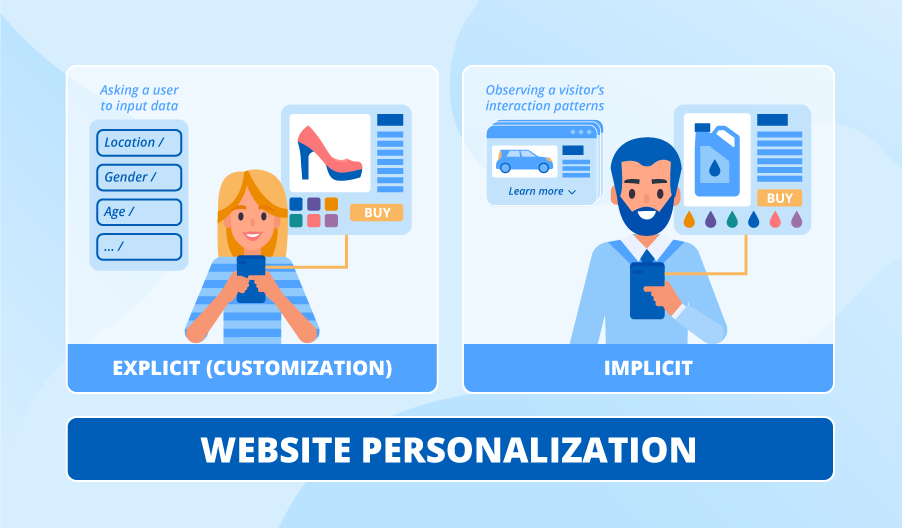
Website personalization means adapting parts of a website experience to make content, offers, messages, or navigation more relevant to individual visitors or specific audience groups.
For example, an e-commerce website may recommend products based on previous browsing behavior. A local service business might highlight services available in the visitor’s region.
Personalization can influence elements such as:
- Headlines
- Calls to action
- Product recommendations
- Service suggestions
- Content
- Offers
- Navigation
- Forms
- Landing pages
The objective is not to create a completely different website for every visitor. Instead, businesses can make strategic adjustments that improve relevance and usability.
1. Personalization Helps Visitors Find Relevant Information Faster
One of the biggest benefits of personalization is reducing the effort required to find useful information.
Imagine a visitor arrives on a website offering multiple digital marketing services. If the website can guide that visitor toward the service most relevant to their interests, the customer journey becomes easier.
A simpler journey can reduce frustration and increase the likelihood of conversion.
This is particularly valuable for businesses with large websites, multiple services, or different customer segments.
2. Personalized Content Can Increase Engagement
Generic content may not capture everyone’s attention.
Personalized content can help businesses present information that matches a visitor’s interests or behavior.
For example, if someone has previously viewed several SEO-related articles, showing them a relevant SEO guide or service page can encourage them to continue exploring.
Engagement can include:
- More pages viewed
- Longer sessions
- More content interactions
- More return visits
- More CTA clicks
The more relevant the experience feels, the more likely visitors are to continue through the website.
3. Use Personalized Calls to Action
Calls to action are one of the most important elements of a conversion-focused website.
A generic CTA such as “Learn More” may not always communicate the next step clearly.
Businesses can test CTAs based on the visitor’s intent.
For example:
New visitor: “Explore Our Services”
Returning visitor: “Book a Consultation”
High-intent visitor: “Request a Free Quote”
Matching the CTA with the visitor’s stage in the buying journey can make the next step feel more natural.
4. Location-Based Personalization
Location can be useful for businesses that serve different cities, regions, or countries.
A visitor from Australia may be more interested in information specific to the Australian market, while a visitor from Qatar may need completely different service information.
Location-based personalization can help display:
- Local services
- Regional offers
- Relevant contact information
- Local case studies
- Location-specific content
- Service availability
However, personalization should always be useful rather than intrusive.
Businesses targeting multiple markets can combine personalization with custom web development services USA only when the broader SEO strategy is aligned with the correct audience and market. SEO targeting and website personalization should work together rather than operate as completely separate strategies.
5. Personalization Can Improve Lead Generation
Lead-generation forms can also benefit from personalization.
A new visitor may need a simple form asking for basic information. A returning visitor who has already explored several service pages may be more comfortable completing a more detailed consultation form.
Businesses can also adjust messaging around the form.
For example:
“Tell us about your project”
may be more appropriate for a general visitor, while:
“Let’s discuss your SEO growth strategy”
could be more relevant to someone who has repeatedly viewed SEO-related content.
Reducing unnecessary friction can make it easier for visitors to submit their information.
6. Use Behavioral Data to Understand Visitors
Website personalization works best when it is based on meaningful information.
Businesses can analyze signals such as:
- Pages viewed
- Content interactions
- Previous visits
- Referral sources
- Device type
- Geographic region
- Products viewed
- Time spent on pages
- Conversion history
These insights can reveal what different audiences care about.
For example, if visitors who read a specific blog frequently move to a particular service page, that relationship can be used to improve internal navigation and recommendations.
7. Personalization Builds a More Relevant Customer Journey
A visitor’s journey does not always begin and end with one page.
They may discover a blog through search, read an article, explore a service, return several days later, and eventually submit a contact form.
Personalization can help connect these stages.
Instead of treating every visit as a completely new interaction, businesses can create experiences that reflect previous engagement.
This can make the customer journey feel more connected and intentional.
8. Personalization Can Strengthen Trust
Relevance can contribute to trust.
When visitors quickly find information that relates to their specific problem, they may feel that the business understands their needs.
For example, a healthcare website might organize information differently for patients and healthcare professionals. A B2B company could highlight different solutions for startups and larger organizations.
The key is to make personalization genuinely helpful.
Businesses should avoid creating false urgency, misleading recommendations, or overly aggressive personalization.
9. Combine Personalization With SEO
Personalization and SEO need to be implemented carefully.
Search engines need consistent, crawlable, and understandable website content. Businesses should avoid dynamically changing important SEO content in ways that make pages difficult to interpret or index.
A strong strategy keeps core SEO elements stable while using personalization for suitable areas such as recommendations, CTAs, supporting content, or user-specific experiences.
An experienced professional seo services agency can help businesses maintain a balance between personalized experiences and a strong organic search foundation.
10. Personalization Can Support Returning Visitors
Returning visitors are often valuable because they already know something about the business.
Instead of showing the same generic homepage experience every time, businesses can guide returning visitors toward useful next steps.
For example, someone who previously viewed a service page might see:
“Ready to discuss your project?”
Rather than another introductory message.
This can help move visitors further down the conversion funnel.
11. Personalization for E-Commerce Websites
E-commerce businesses can use personalization in several ways.
Common examples include:
- Recommended products
- Recently viewed products
- Related products
- Personalized offers
- Category recommendations
- Cart reminders
- Customized promotions
If a customer has shown interest in a specific product category, relevant recommendations can make product discovery easier.
Personalization can therefore improve both the shopping experience and opportunities for additional sales.
12. Personalization Should Be Privacy-Friendly
Businesses should always consider privacy when collecting and using visitor information.
Be transparent about data collection, follow applicable privacy requirements, and avoid collecting information that is unnecessary for the intended experience.
Personalization should improve the customer experience without making visitors feel that their online behavior is being monitored excessively.
Trust is essential for conversions, so privacy should be treated as part of the overall customer experience.
13. Test Personalization Instead of Assuming It Works
Not every personalization feature will automatically increase conversions.
Businesses should test different experiences and compare results.
Useful metrics include:
- Conversion rate
- CTA clicks
- Form submissions
- Engagement
- Time on page
- Returning visitors
- Revenue
- Lead quality
For example, one CTA may generate more clicks but fewer qualified leads. Another may produce fewer clicks but significantly better customers.
Testing helps businesses understand what actually improves business performance.
Personalization for Australian Businesses
Businesses targeting specific markets can use personalization to make their website more relevant to local customers.
For example, companies targeting Sydney may highlight location-specific services, customer examples, or regionally relevant information.
When combined with a broader SEO strategy, this can create a more targeted customer journey.
Businesses looking to improve organic visibility in USA can also consider website development services USA as part of their wider digital marketing strategy.
The Future of Website Personalization
Artificial intelligence is making personalization more sophisticated.
Modern systems can analyze large amounts of behavioral data and identify patterns that would be difficult to detect manually.
AI can potentially help businesses personalize:
- Content recommendations
- Product suggestions
- Search results
- Customer journeys
- Offers
- Support experiences
- Website messaging
However, technology should always serve a clear business and customer purpose.
The best personalization is often subtle. Visitors may simply feel that the website is easier to use and more relevant without knowing exactly why.
Conclusion
Website personalization can help businesses create more relevant digital experiences, improve engagement, reduce friction, and increase conversions.
From personalized CTAs and recommendations to location-based content and behavior-driven experiences, there are many ways businesses can make their websites more customer-focused.
However, personalization should not replace strong website design, SEO, content, performance, or usability. It should complement them.
Businesses that combine personalization with a strong digital strategy can create websites that are easier to discover and more effective at turning visitors into leads and customers.
For businesses seeking cost-effective growth in the USA, custom web development services USA can complement website personalization by helping attract the right visitors in the first place.
The ultimate goal is simple: show the right visitor the right information at the right time—and make the next step easy.